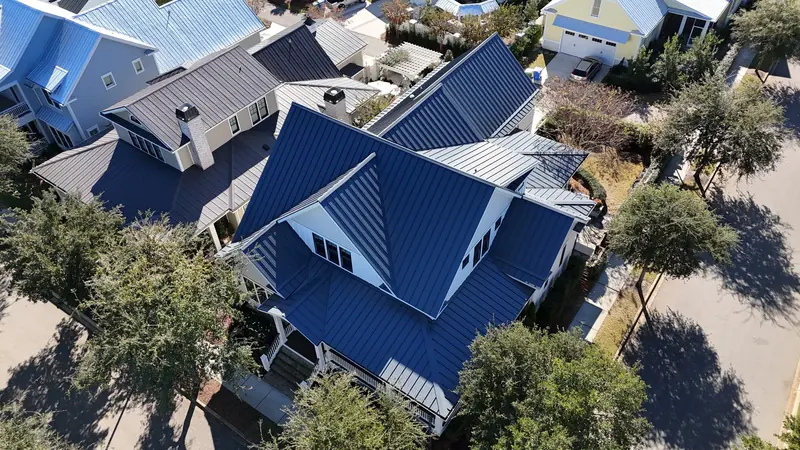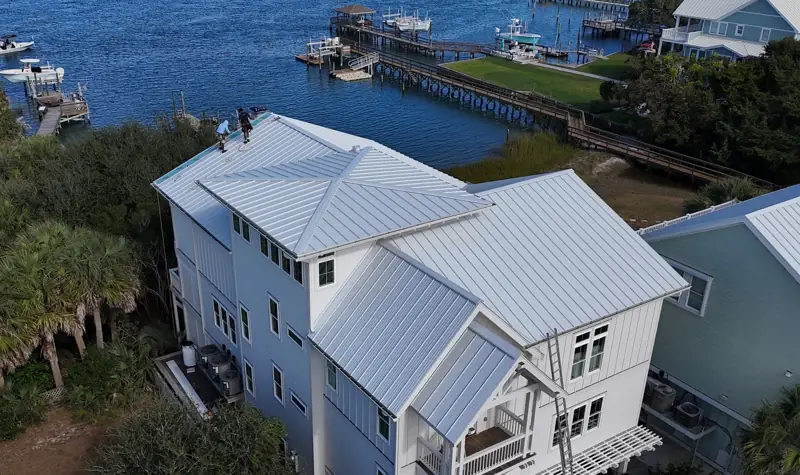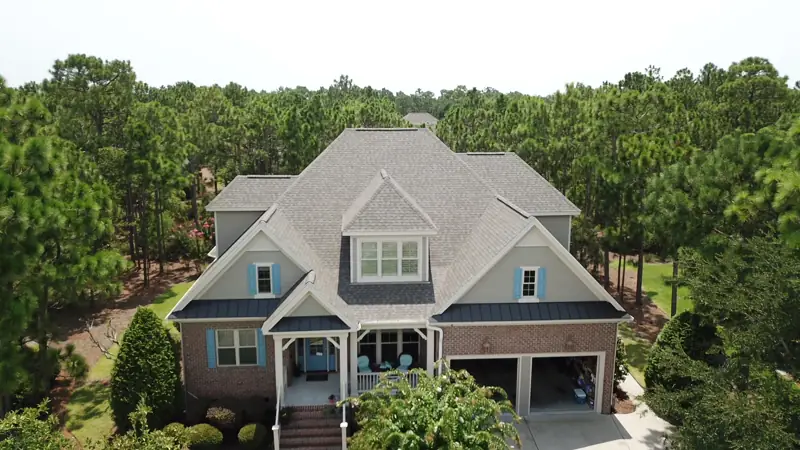
Side-by-side comparison
| Architectural shingles | Standing seam metal | |
|---|---|---|
| Up-front cost | Lower | Higher, often 2x or more |
| Typical coastal life | 20–30 years | 40–60 years |
| Wind resistance | Good to very good when installed to high-wind specs | Excellent with concealed clips |
| Salt air | Fasteners and flashing can corrode | Excellent with correct metal, coating and fasteners |
| Heat | Absorbs more heat | Reflects more heat, especially light colors |
| Maintenance | Low; occasional repairs | Very low |
| Look | Traditional, many colors | Clean coastal lines, many colors |
| Repairs | Easy and inexpensive | Specialized |
| FORTIFIED eligible | Yes | Yes |
When shingles are the better choice
- You plan to sell within about 10 years.
- Your budget is the top priority.
- Your HOA limits metal.
- The home is inland and sheltered from salt spray.
When metal is the better choice
- You plan to stay 15 to 20 years or more.
- The home is oceanfront, soundfront or on a barrier island.
- You want the lowest maintenance and best storm performance.
- You like the coastal standing seam look.
The cost-per-year view
Divide installed cost by expected life. A shingle roof costing $16,000 that lasts 25 years costs about $640 per year. A metal roof costing $33,000 that lasts 50 years costs about $660 per year. If you will be in the home long enough, metal is often the cheaper roof.
A middle path
Many coastal homeowners put architectural shingles on the main roof and standing seam metal on porches, bay windows and dormers. It adds curb appeal and puts metal where it shows most, at a moderate added cost. Metal shingles are another middle option.
Metal vs shingle FAQs
Is metal louder?
Not over a solid deck with underlayment.
Does metal attract lightning?
No.
Will metal dent?
Large hail can dent thinner metal; standing seam in heavier gauges resists dents well.
Key takeaways
- Shingles win on up-front cost.
- Metal wins on life span, wind and salt resistance.
- Your time in the home decides most cases.
- Both can be built to FORTIFIED.
Myths about metal and shingles
Myth: Metal roofs rust on the coast.
Reality: Correctly specified metal performs very well near salt water.
Myth: Shingles cannot handle hurricanes.
Reality: High-wind shingles over a sealed deck can perform well; FORTIFIED shingle roofs are common.
Myth: Metal makes the house hotter.
Reality: Metal reflects heat and often keeps attics cooler.
Resale and curb appeal
On the coast, many buyers see standing seam as a premium feature, and a newer roof of any type helps with inspections and insurance. If resale within a few years is your goal, a quality shingle roof is usually enough; if the home is on the water or in a premium neighborhood, metal can strengthen your listing.
Glossary
- Standing seam
- Metal panels joined by raised seams and held with concealed clips.
- PVDF (Kynar)
- A premium paint finish for metal that resists fading and chalking.
- Gauge
- Metal thickness; lower numbers are thicker.
- Square
- 100 square feet of roof surface, the unit roofers use for pricing.
- FORTIFIED
- A construction standard from IBHS that strengthens roofs against high wind and wind-driven rain.
- Deck (sheathing)
- The plywood or OSB boards that roofing is fastened to.
- Attic ventilation
- Balanced airflow from soffit intake to ridge exhaust that removes heat and moisture.
A worked example
Two neighbors on Pleasure Island replace their roofs the same year. One plans to sell in five years and chooses high-wind architectural shingles with a FORTIFIED upgrade for insurance savings. The other plans to retire in the home and chooses standing seam metal, accepting the higher up-front cost for a roof that may never need replacing again. Both made the right call for their plans. Illustrative scenario, not a specific customer.
Need help deciding?
Ask for an estimate with both options priced.