How we find and fix roof leaks
A ceiling stain rarely sits directly under the hole in the roof. Water runs along the underlayment, rafters and the top of drywall before it shows up inside, sometimes several feet away. That is why leak repair starts in the attic. We trace the water path from the stain back to the point where it enters, check every penetration and flashing detail nearby, and then confirm on the roof. Once we know the source, we show you photos before we fix anything.
The most common leak sources on coastal homes
- Cracked pipe boots. The rubber collars around plumbing vents dry out and split in the sun, often well before the shingles wear out.
- Wind-lifted shingles. Strong gusts break the seal strip under a shingle. Rain is then driven up and under it.
- Failed step and counter flashing. Where roofs meet walls, dormers and chimneys, flashing loosens or was never installed correctly.
- Valleys. Two roof planes channel a lot of water into one line; worn or debris-filled valleys leak.
- Skylights. Seals age and curb flashing fails.
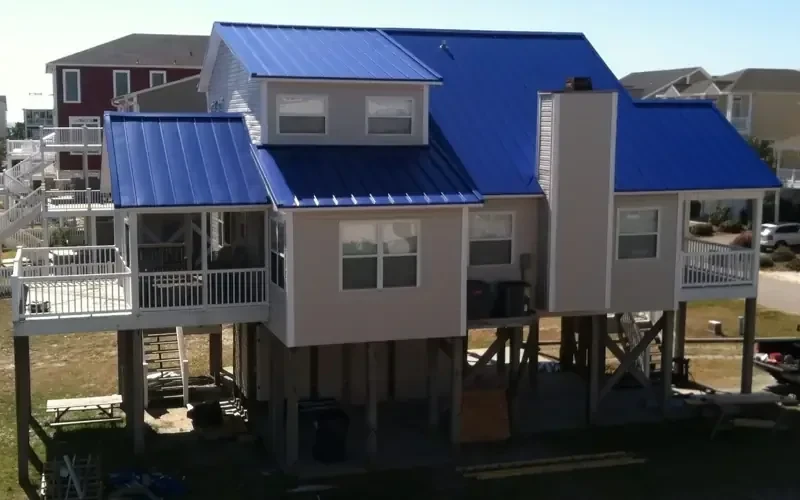
- Exposed fasteners on metal roofs. Rubber washers break down and screws back out over time.
- Clogged gutters. Water backs up under the drip edge and into the fascia and soffit.
Repair costs in Wilmington
| Repair | Typical cost |
|---|---|
| Pipe boot replacement | $150 to $350 |
| Replace a small area of shingles | $250 to $750 |
| Chimney or wall flashing | $400 to $1,500 |
| Valley repair | $500 to $1,500 |
| Metal roof fastener and sealant service | $400 to $1,200 |
| Emergency tarping | $350 to $900 |
Every repair is quoted before work begins. If the damage came from a covered storm, your insurer may pay for it after your deductible.
Repair or replace: an honest answer
We would rather earn a customer for life than sell a roof you do not need. A repair is usually the right call when the roof is under about 15 years old, the problem is in one area, and the deck is sound. Replacement makes more sense when leaks keep appearing in new places, shingles are brittle and losing granules everywhere, the deck is soft, or the cost of repairs over the next few years would approach the cost of a new roof. If your insurer has started asking about roof age, that is also worth factoring in. Our guide Repair or replace? walks through the full checklist.
Repairs on every kind of roof
We repair architectural and three-tab shingles, metal shingles, standing seam and exposed-fastener metal roofs, and low-slope membranes such as TPO. Matching older shingles can be tricky because colors are discontinued; we carry common profiles and will tell you if a patch will be visible. On metal roofs we replace fasteners with longer-life versions, reseal laps and repair seams. For businesses, see commercial roof repair.
Preventing the next leak
- Have the roof checked after every named storm and at least every two years.
- Keep gutters and valleys clear, especially under pines and live oaks.
- Replace pipe boots before they crack; they are cheap compared with a ceiling.
- Trim branches that touch or overhang the roof.
- Make sure bathroom and kitchen fans vent outside, not into the attic.
If you see a stain, a drip or daylight in the attic, call (910) 799-3858. Small leaks are inexpensive to fix early and expensive to ignore.