A simple decision checklist
| Question | Points to repair | Points to replace |
|---|---|---|
| How old is the roof? | Under 15 years | Over 18–20 years (shingles) |
| Where is the damage? | One area | Multiple slopes |
| Deck condition? | Solid | Soft or rotted in several places |
| Leak history? | First leak | Recurring leaks |
| Shingle condition? | Flexible, granules intact | Brittle, curling, bald |
| Insurance? | No concerns | Insurer flagging roof age |
| Plans for the home? | Selling soon | Staying long term |
The 30 percent rule of thumb
If the cost of repairs you expect over the next few years approaches about 30 percent of a new roof, replacement usually becomes the better investment. This is a rule of thumb, not a law; we will show you the numbers for your roof.
What about a partial replacement?
Replacing one slope can make sense when damage is limited to one side and the rest is in good shape. Downsides: color mismatch and a seam where old and new meet, and it does not reset the clock on the rest of the roof. Insurers may cover only the damaged slope unless matching is impossible.
Repair costs vs replacement costs
Typical repairs run $250 to $1,500. A full replacement on an average home runs $11,000 to $21,000. See roof replacement cost for details.
How we advise
We inspect, photograph and explain. If a repair is the right answer, that is what we recommend, even though a replacement would be a bigger job for us. Honest advice is how we keep a 5.0-star rating.
Repair or replace FAQs
Can I put new shingles over old ones?
Building codes generally allow limited overlays, but on the coast we recommend tear-off to inspect and re-nail the deck.
Will a repair affect my insurance?
Not usually. Documented repairs show the roof is maintained.
Key takeaways
- Age, spread of damage and deck condition decide most cases.
- Isolated problems on younger roofs: repair.
- Recurring, widespread problems on older roofs: replace.
Questions to ask your roofer
- How many years do you think this roof has left?
- What is the cost of the repair, and how long will it last?
- Are there other problem areas I should know about?
- Is the deck sound?
- Would insurance be likely to cover any of this?
- What would replacement cost, with and without FORTIFIED?
Repair or replace myths
Myth: Roofers always push replacement.
Reality: A good roofer recommends what the roof needs. If a repair will do, you should hear that.
Myth: A new layer over the old roof is just as good.
Reality: Overlays hide deck problems and add weight; tear-off is better on the coast.
Timing matters
If replacement is a year or two away, a well-done repair can bridge the gap while you plan and budget. Just make sure the repair is documented so your insurer knows the roof is maintained.
Glossary
- Deck (sheathing)
- The plywood or OSB boards that roofing is fastened to.
- Pipe boot
- The flashing collar around a plumbing vent pipe.
- Flashing
- Metal pieces that seal joints at walls, chimneys, valleys and edges.
- Square
- 100 square feet of roof surface, the unit roofers use for pricing.
- Recover
- Installing a new roof system over an existing one rather than tearing off.
- Attic ventilation
- Balanced airflow from soffit intake to ridge exhaust that removes heat and moisture.
- FORTIFIED
- A construction standard from IBHS that strengthens roofs against high wind and wind-driven rain.
A worked example
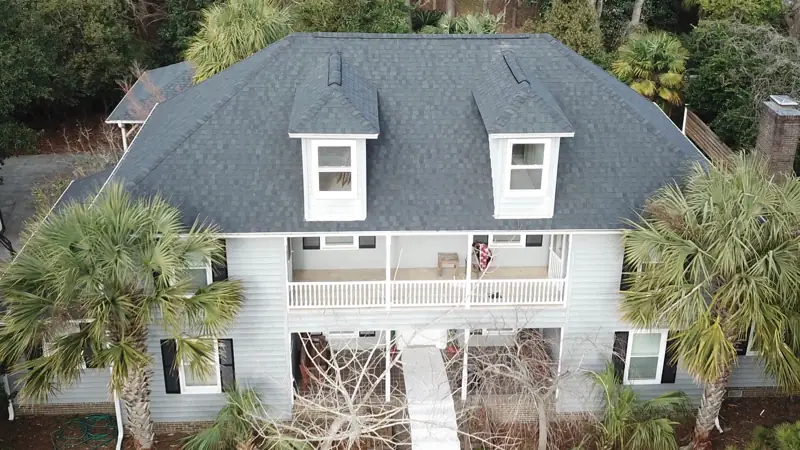
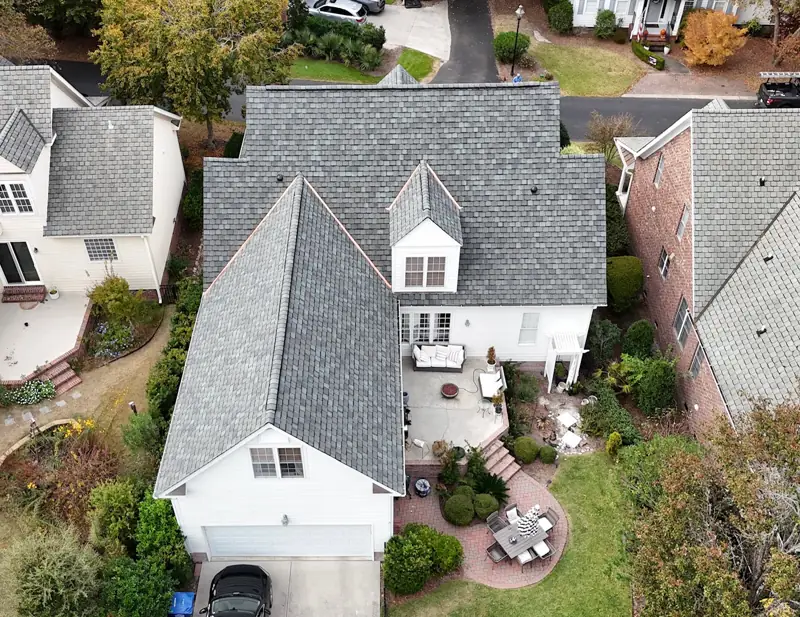
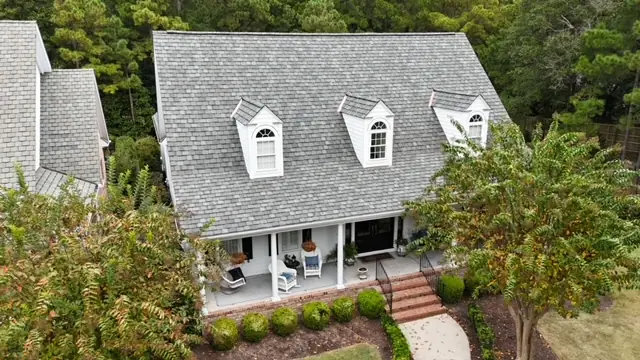
A 12-year-old shingle roof in Leland leaks around one plumbing vent after a storm. The rest of the roof is in good shape and the deck is solid. A pipe boot replacement and a few shingles fix it for a small fraction of a new roof. Down the street, a 22-year-old roof has granule loss on every slope, soft decking near the eaves and leaks in two rooms. Repairs would be a band-aid; replacement is the better investment. Illustrative scenario, not a specific customer.