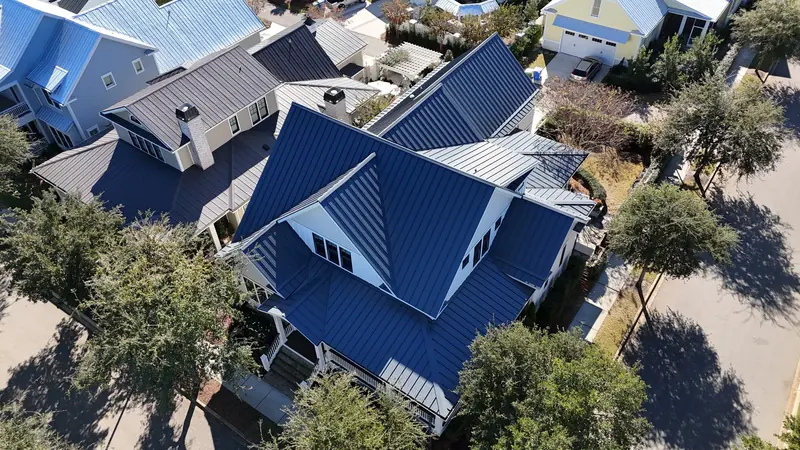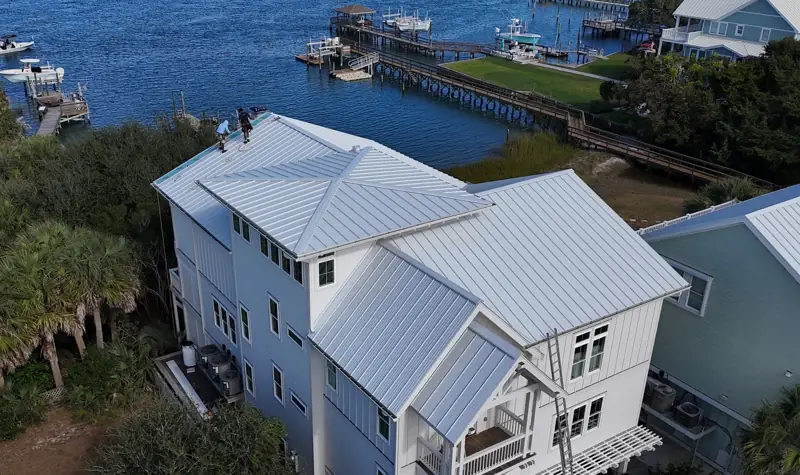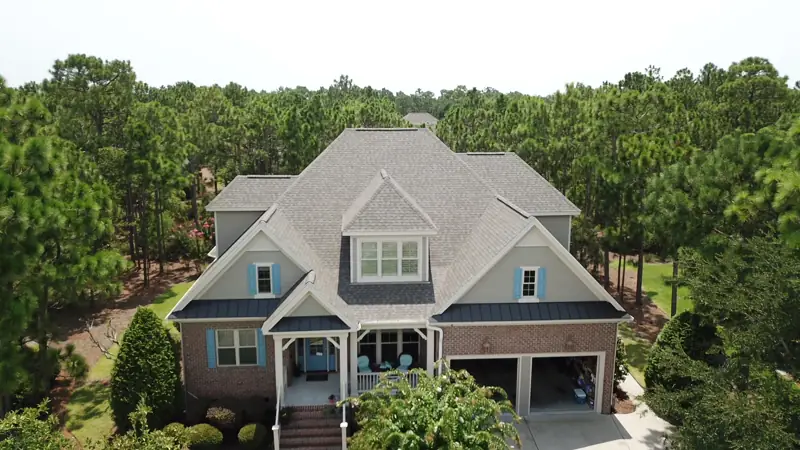
Side-by-side
| TPO membrane | Standing seam metal | |
|---|---|---|
| Roof slope | Flat and low slope | Low to steep slope (profile dependent) |
| Up-front cost | Lower | Higher |
| Typical life | 20–30 years | 40+ years |
| Energy | White, highly reflective | Reflective in light colors |
| Maintenance | Seams, penetrations, drains | Low |
| Wind | Good when edges and fastening are designed correctly | Excellent |
| Appearance | Not usually visible | Visible; brand color option |
When TPO makes sense
- Flat or very low-slope roofs.
- Large areas where cost per square foot matters most.
- Buildings where the roof is not visible.
- Energy efficiency priorities.
When metal makes sense
- Pitched commercial roofs.
- Long ownership horizons.
- Visible roofs where brand color matters.
- High wind exposure.
Can you convert a flat roof to metal?
Sometimes, using a framing system to add slope. It adds cost but can solve chronic ponding and leaks and create a longer-lasting roof. We assess the structure first.
Total cost of ownership
Compare installed cost, expected life, maintenance and energy. A TPO roof at $8 per square foot lasting 25 years and a metal roof at $14 per square foot lasting 45 years can come out closer than the up-front prices suggest.
Commercial roof FAQs
Can TPO be repaired easily?
Yes. Seams can be re-welded and patches heat-welded.
Is PVC better than TPO?
For grease and chemical exposure, often yes.
Key takeaways
- Slope usually decides.
- TPO wins on up-front cost for flat roofs.
- Metal wins on life span for pitched roofs.
How coastal conditions change the choice
In Wilmington and the beach towns, salt air and hurricane winds shift the math. TPO membranes are not affected by salt, but their metal edges, fasteners and rooftop equipment curbs are, so those components need corrosion-resistant specifications. Metal roofs can thrive near the ocean when the right metal, coating and fasteners are used, and poorly specified metal can rust quickly. Wind design matters for both: flat-roof perimeters and corners and metal panel ends take the highest uplift. A good proposal addresses these details explicitly rather than quoting a generic system.
Myths about commercial roofs
Myth: Flat roofs always leak.
Reality: Well-designed and maintained low-slope roofs perform for decades. Most leaks come from penetrations, drains and neglected seams.
Myth: Metal roofs are too noisy for offices.
Reality: With insulation and a solid deck, interior noise is not an issue.
Myth: A coating is as good as a new roof.
Reality: Coatings can extend a sound roof but will not fix wet insulation or structural problems.
Questions to ask before choosing
- How long will we own the building?
- Is the roof visible to customers?
- What is the current slope and drainage?
- Is the existing insulation dry?
- What warranty do we need for lenders or tenants?
- What maintenance can we commit to?
Answer these, and the right system is usually obvious. We are happy to walk through them with you on site, and our proposals show TPO and metal options side by side when both are viable.
Glossary
- TPO
- Thermoplastic polyolefin, a single-ply membrane for flat and low-slope roofs.
- Standing seam
- Metal panels joined by raised seams and held with concealed clips.
- PVDF (Kynar)
- A premium paint finish for metal that resists fading and chalking.
- Gauge
- Metal thickness; lower numbers are thicker.
- Recover
- Installing a new roof system over an existing one rather than tearing off.
- Square
- 100 square feet of roof surface, the unit roofers use for pricing.
- Flashing
- Metal pieces that seal joints at walls, chimneys, valleys and edges.
A worked example
A retail strip in Wilmington has a 12,000 square foot low-slope roof with three HVAC units and recurring leaks at old seams. Core samples show dry insulation, so a TPO recover with tapered insulation to fix ponding is the most cost-effective route. A detached showroom on the same property has a pitched roof facing the road, where a standing seam roof in the brand color adds visibility and a 40-plus year life. One property, two systems, each chosen for its slope and purpose. Illustrative scenario, not a specific customer.